
South Korea’s Financial Services Commission (FSC) has ordered exchanges to suspend new crypto lending products until formal guidelines are in place, citing mounting risks to users and market stability.
Regulators pointed to a recent incident at Bithumb where more than 27,000 customers tapped lending services in June, with 13% forced into liquidation after collateral values swung against them.
The move by the FSC comes days after analysts at Galaxy Digital published a report where they flagged the growing amount of leverage in crypto markets as a concern.
The administrative guidance, from the FSC allows existing loans to run their course but bars the rollout of new lending services. Officials said that if platforms ignore the directive, on-site inspections and other supervisory actions will follow. Formal lending guidelines are expected in the coming months.
Korea’s crackdown lands as crypto leverage globally surges back toward bull-market levels. Galaxy’s report shows crypto-collateralized loans jumped 27% in Q2 to $53.1 billion, the highest since early 2022.
Last week’s $1 billion liquidation wave, sparked by bitcoin’s retreat from $124,000 to $118,000, highlighted how quickly overstretched bets can unwind.
Analysts warn that stress points are already showing across the system: DeFi liquidity crunches, ETH staking exit queues, and widening spreads between on-chain and over-the-counter dollar lending rates.
📖 Related Reading
- 📰 TON Moves Past $3 Milestone on High Trading Volume
- 📰 Ether Eyes Biggest Monthly Gain Since 2022 as ETFs, Corporate Treasuries Drive Rally
However, not everyone agrees with the approach the Korean authorities are taking. DNTV Research’s Bradley Park argues that better safeguards are needed, and not a shutdown.
“The rational approach is to upgrade UI/UX, risk disclosures, and LTV controls to manage exposure safely,” Park told CoinDesk in a note, noting that most exchange lending is in stablecoins used to build short positions.
He added that the regulator’s real concern may be market-structure distortions, such as the negative kimchi premium, rather than the service itself.
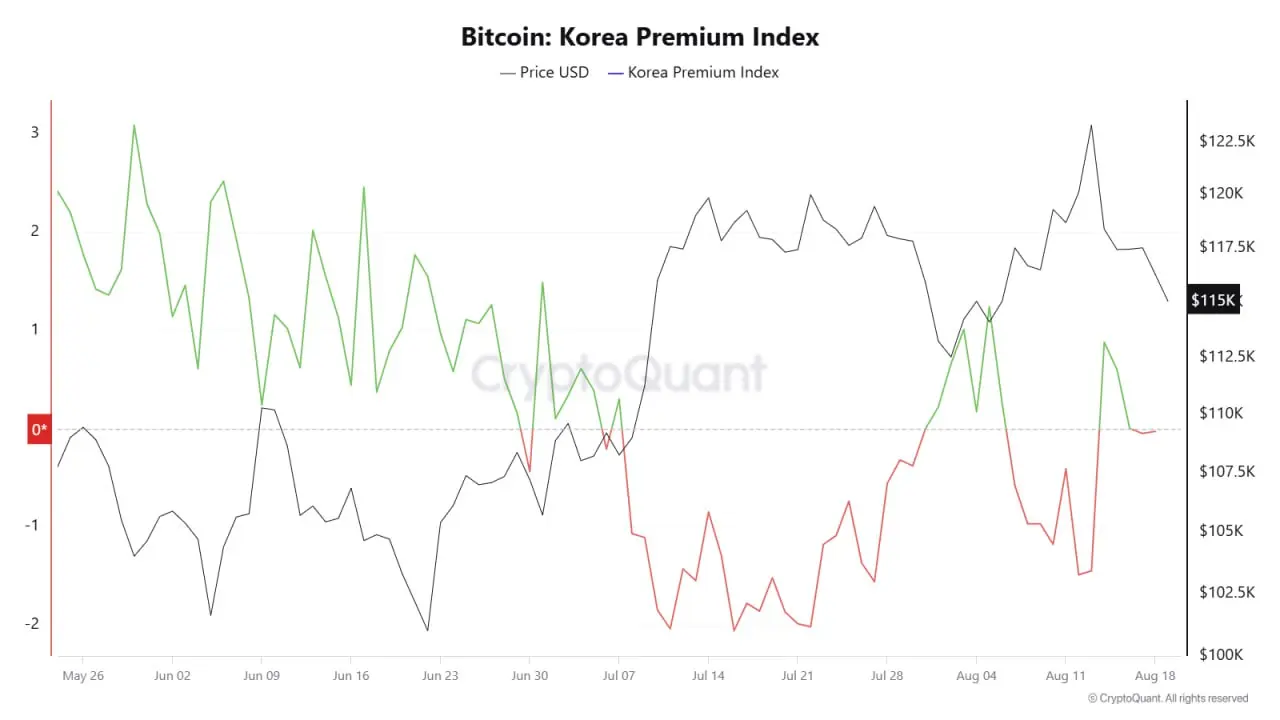
Park said that transparency gaps also complicate oversight: Bithumb discloses the scale of its lending activity, but Upbit, the country’s largest exchange, does not. That opacity could make it harder for regulators to judge systemic risks and may be a key factor behind the blanket suspension.
“Until these structural issues are addressed, reopening may take time; priority should be understanding the mechanism and adopting a data-driven design, rather than blanket restrictions,” he concluded.
** Read more:Crypto for Advisors: Asian Stablecoin Adoption**
🔗 You Might Also Be Interested In
TON Moves Past $3 Milestone on High Trading Volume
Ether Eyes Biggest Monthly Gain Since 2022 as ETFs, Corporate Treasuries Drive Rally
Asia Morning Briefing: BTC Slips Below $110K as ‘Signs of Fatigue’ Emerging
💡 Stay updated with the latest cryptocurrency news and insights by following our website! 🔔 Bookmark this site to get first-hand blockchain and digital currency news!